
The Diamond Theory
Differentiating Story Types via the Quality of the Inciting Incident

Introduction
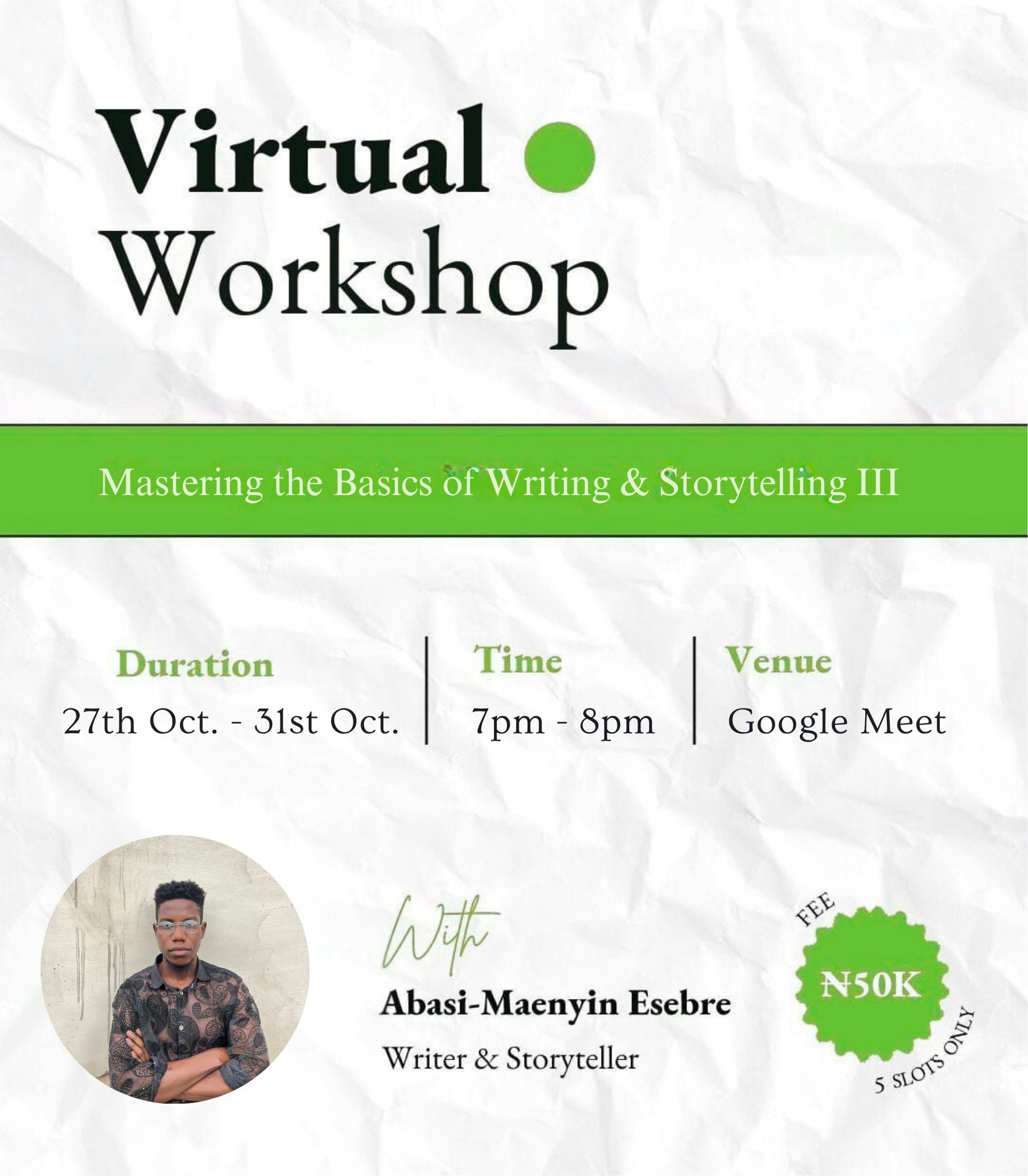
Two days ago, I made a tweet announcing the third and final iteration of my virtual workshop, Mastering the Basics of Writing and Storytelling, which I’ve been running for roughly two years now. The flier was sparse. It gave no meaningful information about what I’d be teaching or what unique insight anyone who enrolls would get. All it shows is the time, venue, and duration.
But what exactly do I offer that made someone wait months in advance after the first workshop had ended, despite a price surge, too? As much as I’d love to submit summaries about nearly all the concepts I tackle in the workshop—from theme to tension, character arc to character growth, beauty in prose to the mechanics of a great sentence—-I’d focus instead of a small aspect that I believe offers a clue into how I bring a fresh outlook to a fixed aspect of writing and a key element of a story: a private theory on story structure using the inciting incident as a defining node.
The Diamond Theory
As defined in the manual I developed for the workshop, a story is a narrative that tracks a character or group of characters trying to achieve a goal at all costs. A story, according to this definition, takes its form by tracking the character(s)’s journey through time in relation to the goal or objective or desire they’re trying to realize with everything within their power, using everything at their disposal. It means, by default, that many stories have similar structures. In classic story structure, especially in regards to the shape of stories as defined by their plots, a beat you’re going to find, no matter what genre, is the inciting incident.
The inciting incident is the first beat in a typical story. Storytelling handbooks make it clear that the inciting incident is the action, situation, or event that jolts our protagonist out of stasis, their routine, and sets the narrative in motion. This gives several clues into its narrative function. You learn about stasis. You learn that the inciting incident is the first point of change. It happens to the character, so some external force is almost always to blame here. For the longest, this was all I knew about the inciting incident, a lot, no doubt, but couldn’t there be more to this seemingly commonplace concept?
I like to know how things function. Once and for all. I like to isolate the core of an idea, hone a definition out of my understanding, and voila, it becomes knowledge I can transfer to another person in simple terms that not only offers insight into said concept, but lays bare what would seem rather oblique. I pondered the inciting incident for days. I refused to read any books or articles on the subject. I’d already done enough of that in the years prior. What is the inciting incident? What is so special about it? How does it function within different genres? My answer came in no time.
The inciting incident performs three major tasks in a story.
It gives the protagonist their motive/motivation that justifies them going on this journey and experiencing their character arc, the internal growth, at that very particular point in time.
Establishes their overarching external goal and sub-goals.
Establishes the stakes at play.
A revenge thriller illustrates all three: the character, often a man, goes on a mission to avenge his wife and kids after they are killed by the antagonist. His motive/motivation is set by the death of his wife and kids: his grief at both their deaths and the injustice justifies him going on that mission. It gives him the overarching goal of either capturing or killing the perpetrator. And, finally, it establishes the stakes: another family might be the victim of this killer, or they might get away with it.
Using this threefold understanding of the inciting incident, I developed the diamond theory, which differentiates types of stories by the quality of the inciting incident. Quality here refers to qualitative narrative values: positive, negative, etc. According to the diamond theory, when a story catalyst (SC) interrupts a normal state of affairs, the story develops along several lines depending on the quality of the inciting incident, of which there are three:
Positive Inciting Incident (PII): This is the type of inciting incident that hurls the protagonist into a situation that is significantly better than their normal state of affairs. The protagonist’s goal in such stories is to maintain their good fortune as much as they can while trying not to slip either to their former state or worse than they were before. A good example is a story where a character or group of characters stumble upon stolen money or gold.
Negative Inciting Incident (NII): As you can already guess, this one leaves the characters worse than we meet them. A classic example is the opening of Demon Slayer, when Tanjiro’s family is murdered and his sister is turned into a half-demon. These events leave him worse than when we first meet him, but also establishes his motive (to become a demon slayer, purging the earth of them), and the stakes: his sister will turn into a demon if he doesn’t figure out a way to turn her human again. In a story that gets its structure from the NII, our protagonist is often reaching to match their former life, or come as close as narratively possible to a new iteration of peace.
The Casino Inciting Incident (TCII): This type gives the character the choice to steer their fate. The protagonist(s) here construct a plan to achieve a goal of their choice, while avoiding the worst possible outcome (this informs the stakes). Depending on how well the plan goes, TCII can either devolve into a PII or an NII. A genre that makes the most use of TCII is the caper or heist story. However, for TCII to function, the narrative often needs something I call a microinciting incident.
Microinciting Incident (MII): A microinciting incident is an inciting incident that occurs in either the second or third act of a story. It often happens to another character, not the protagonist, and the purpose of this inciting incident is to justify a direction the story gets to develop in and give the protagonist license to pursue a different line of action. A good example of a MII is the scene from The Devil Wears Prada when Emily, Miranda’s secretary, gets the flu and cannot, as a result, perform at her best, which makes Miranda invite Andrea to Paris with her, alongside Emily. The point of the MII (Emily getting the flu) was to create a good reason to justify why Miranda would invite Andrea, a junior, on a trip she normally reserves for more experienced staff. It’s subtle, but an effective narrative strategy to maintain the internal logic. The only time a MII happens at the beginning of a narrative is in TCII. Robbers often stage a heist when some or several external conditions are met: an inexperienced guard gets employed, a national or global holiday comes around, or a surge in demand for a particular good. These moments of providence incentivize them to carry out the heist because the window for success is at its most optimal then.
Conclusion
This is just a sample of my thoughts on one aspect of the story, a series of insights, a way of looking and understanding a common element of storytelling that is at once startling and informative. This workshop features revelations for other aspects of the story like theme, plot, genre, characters, beginnings, and endings. I also talk about prose, how sentences function, how they stretch to accommodate ambition and novelty, and offer exercises to help both novices and professionals to strengthen their skills.
We will dissect films, short stories, and crucial scenes from novels. We’ll have lectures every day for the five days, 7-8 p.m. WAT. The workshop will run from the 27th to the 31st of October 2025. To register as a Nigerian, pay N50,000 to the account:
6321196221
FIDELITY
ABASI-MAENYIN ESEBRE
And, as a diasporan, pay $40 or £30 to this link:
https://buymeacoffee.com/abasimaenyinnn
Send an email to abmaenyin@gmail.com with proof of payment or a DM to me on Twitter @abasimaenyinn. Upon confirmation, you’ll get added to a WhatsApp group where you’ll be given the link to a 6,000+ word document covering everything the workshop will entail.