
City’s Jazz
Calabar as a city that enchants and repels

The more fiction is written about a place, the more real it becomes.
—The Yellow Ruler
I
The Verdict is: Escape
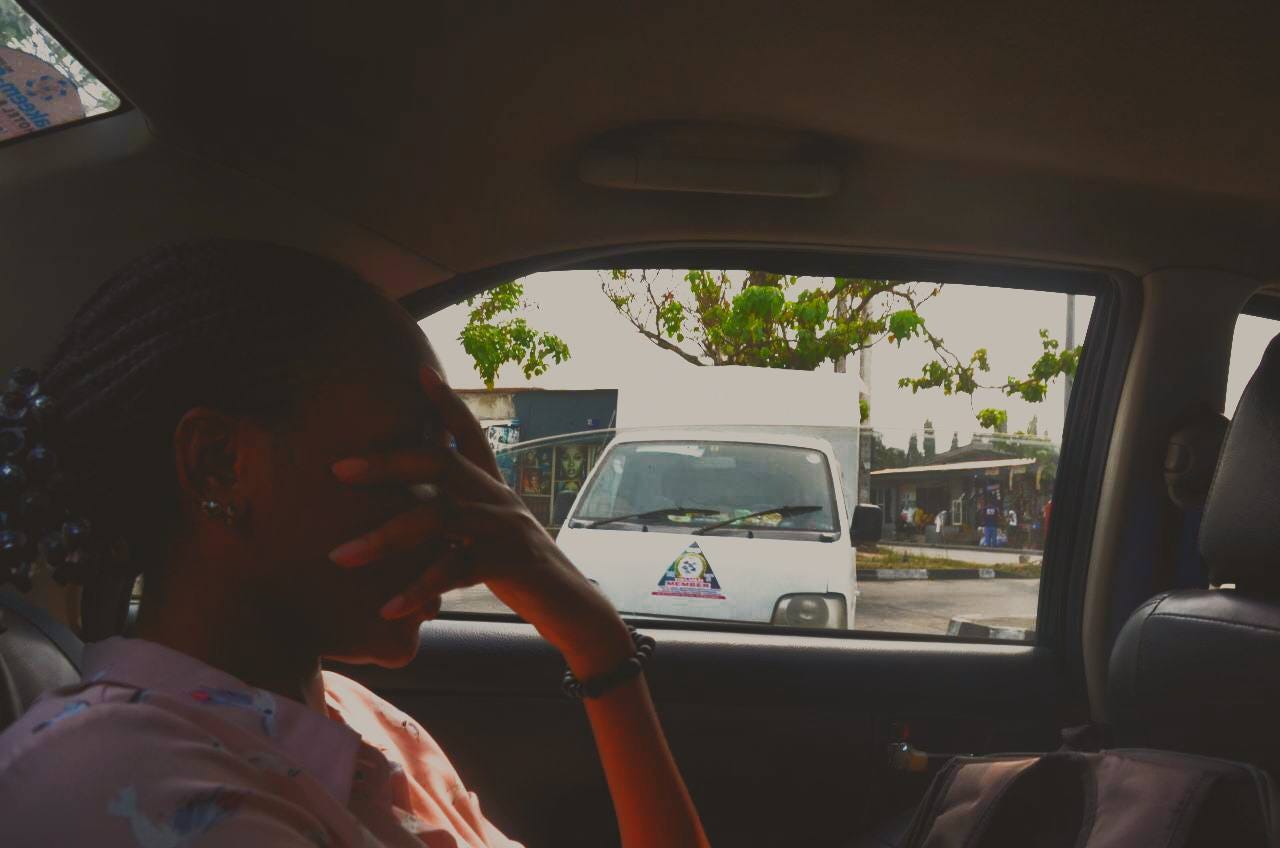
When people travel to Calabar for the first time, they come to visit its ruins. They come to pay tribute as if visiting a dinosaur museum. They gaze at the carcass of the city in a futile attempt to imagine its former brilliance.
This comes as no surprise considering the fact that, in the last decade alone, the city has gone from being a state focused on tourism to a ghost town fraught with infrastructural taxidermy. So, when people come here for the first time they visit Tinapa—where the cable cars and monorail trains are now stationary art installations—or they make the treacherous journey to the freezing Obudu Cattle Ranch, where abandoned hotels litter the hills like remnants of a hastily demolished film set.
The Calabar Christmas Carnival used to bring a flood of people into the state such that making a phone call to someone standing across the road was impossible. People would register in bands, learn complicated and lengthy dance sequences, and wear intricately hand-crafted costumes that bedazzled the crowds. Sure, no young person who wanted to seem cool was interested in the costumes and choreography, except when the Brazilian women passed by or male models with oiled chests. Sure, those nights gave the perfect excuse to stay out as long as possible with friends—in our coolest outfits, smoking, drinking, kissing, and laughing. Few people adhered to curfew, and no one could draw all the attention to theirself. We had the privilege to explore state-sponsored paradise. Taxpayers’ monies brought Marian and Murtala Mohammed Highway to a halt, turned the streets into a mobile club—which is wild for a state where churches outnumber street dustbins—and young people squandered more money than can be accounted for in their day-to-day life. Due to the Governor’s greed and meristematic mediocrity which led to an 8 year hiatus, the event suffered, never to recover. During the last carnival, nothing compared to the previous ones, 24 people got injured and 14 were announced dead.

In February 2018, when Black Panther caused a frenzy, I remember bumping into multiple people at different places having the same conversation: they’d be traveling to Uyo a week before the release date just to watch the picture. Film House, the last cinema in town, had shut down, turning the already dying Marina Resort into a place for amateur photography, board games, and joyless boat rides.
I have lived here all my life, meaning I have many opinions about this place. An adult living in Calabar is like a child in a bouncing castle that’s slowly being deflated. The shops open late. The churches are always in session—even during midday. Everyone has a version of the same memory in the same places. The city is cliché.
The city has nothing new to offer, unless the restlessness it conjures to escape its borders counts as an offering.
It manufactures boredom, which it sells at Black Friday price so no one is exempt from its glib, lackluster promise; hence, everyone has a personal copy of this dissatisfaction. The consequence is a listlessness five grand parties at Amber Lounge cannot dispel. The consequence is rage. The verdict is: escape. And, to be honest, it’s an easy exile, a welcomed departure even. Because, at this point, Calabar is a resting home teeming with youths. And all the creative people here are shipwrecks in the lake of this city. Not to say we want to turn our state to a capitalist nightmare, because God forbid we start having traffic jams here.
We want the roads to lead somewhere that’s not just home.

This sentiment is harsh but warranted. However, since I’m not a pessimist, I have a different story to tell, too, one filled with lichens, flowers, and places that inspire a second glance, views that demand to be seen through an aperture, in IMAX at Cannes Festival.
II. Obsession
In the same way I fell into the rabbit hole of athletics, sommeliers, swimming pools and the misuse of objects in the stories I write, I fell in love with cities. An obsession which led me towards studying architecture in a broader, informal literary sense. Instead of being fascinated by floor plans and the math behind turbulent flow, which is crucial in the building of bridges, I learnt about Georgian mansions and Gothic attics; yellow vinyl and how air pressure in buildings function; the division that came with living in brownstones houses with bay windows; the rise and decline of tenements in Lagos; the function of flying buttresses, balustrades and piano nobile in a building.
I got introduced to parking as a problem most megacities struggle with (everyone already knows about traffic jams), to different architectural movements—brutalist and baroque being my favorite—to smart cities and discovering burning man, an annual event that draws all sorts of creative people into the Nevada desert to spend a week in absolute revelry, community, beauty and filth. Cities, for the past six years, have engulfed my curiosity.
Granted, the history of nearly anything—no matter how deceptively insignificant it might seem at first—is interesting, my love for cities goes beyond steel, concrete and asphalt. I am more concerned with how cities sculpt us, how they potter our existence, how they interact with politics to influence our upbringing and engineer or economic realities. Cities have that much hold on us as humans.
Centuries ago villages held sway; cities were cubicles where a few affluent people mingled, where nothing of significant interest happened. Cities were negligible. With all the innovations we have seen in the 21st century, how people have migrated en masse into cities to bater hope, ambition, skill, hard work and luck for upward mobility and the comfort gotten from wealth, it is no surprise, too, that the cities have been the genie pot of stories. In cities, writers are hunters lying in wait for a passerby, a dust ridden car, or a Delonix in full bloom to inspire a novel, a short story, a gut-wrenching essay. Cities, I’ve come to discover, do favour writers after all. Calabar doesn’t have gargoyles; it has Sugar and Spice.1
III. City’s Jazz

In Jazz by Toni Morrison, apart from little gems littered across the narrative that reference the same subject, there’s an entire chapter where the narrator rambles on and on about the City. The promises it makes in the form of resplendent folks, the crimes and affairs it permits, the endless possibilities each street offers to deliver all adds to its appeal, its irresistible charm that hypnotizes the naïve and enchants the locals. The city is full of myths and romance. The city is a place where one becomes themselves due to the influx and influence of countless others. Where one gets to test their morals, ambition and faith against decadence, mediocrity and sin. The city is a greenhouse curated for a unique expression of one’s self that nearly never repeats elsewhere under the same circumstances. Calabar, with all its shortcomings and foreclosures, is no different.

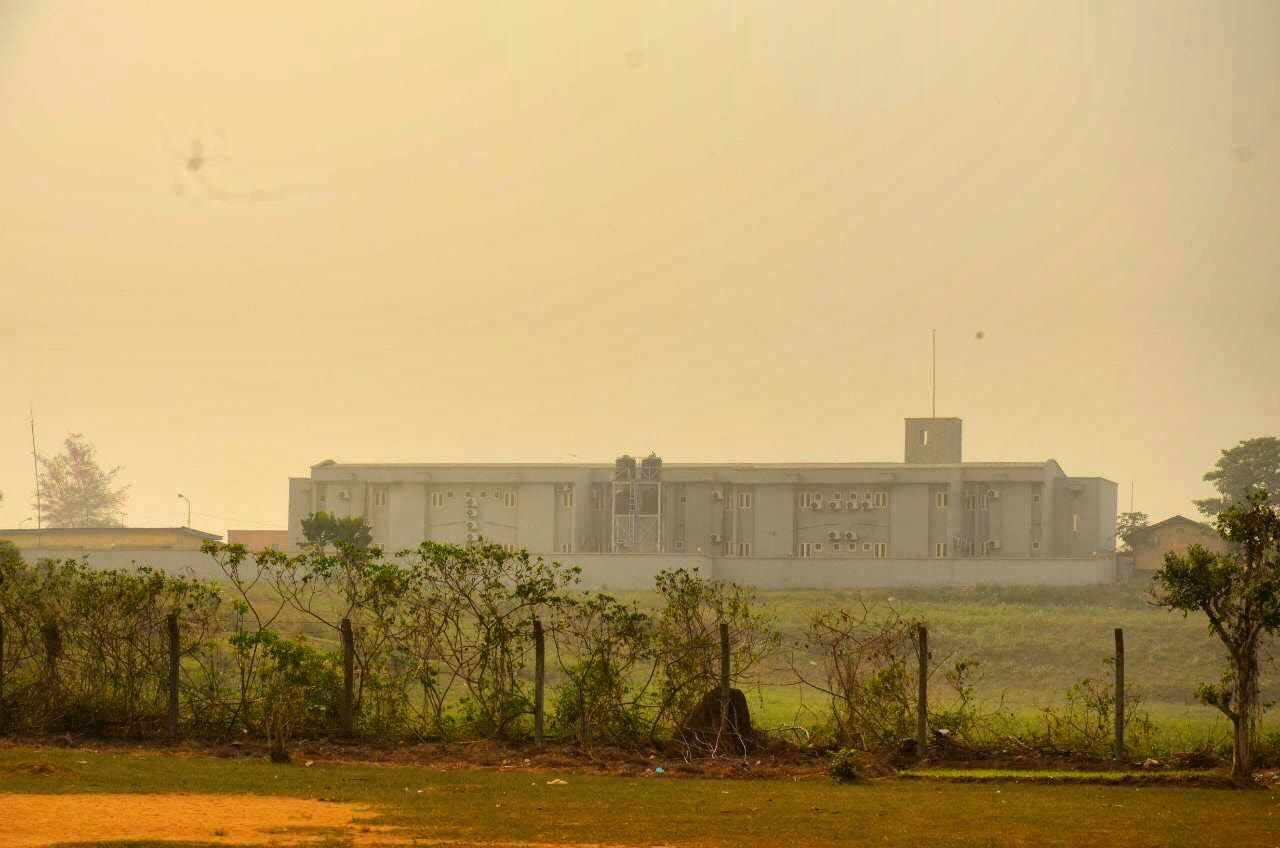
In April, I and three other course mates, armed with a rented camera and hunger, went round Calabar taking photographs of lichens for our research project. During these walks that lasted hours—we’d start by 10 in the morning and finish by 5 in the evening—I got to experience the city from scratch. The city reintroduced itself to me, harnessing the beauty of a place mentioned in a paragraph of some obscure Japanese novel. Whenever my feet ache, I would distract myself with a hibiscus or a cluster of dandelions, or a line of trees standing like tuning pegs on an acoustic guitar. All the pictures here are souvenirs from those five intense days.
The city composed itself in an unmissable symmetry. I couldn’t tear my eyes away. Once, I’d been afraid to centre and render the city in my prose, now I’m dying to make a film here. At night, the haze makes the headlights from minivans cinematic, ominous even. Calabar has been posing for forever. This city is a model in need of a lucky break.

I discovered Calabar has its own unique colour palette, a pastel almost in the style of Wes Anderson—a little more muted, but with as much saturation. Calabar might not be interesting to write or read about, but through the eyes of a filmmaker, this city can hold the entire nation’s imagination hostage. The old buildings are compact; they look like giant Rubik’s cubes equipped with balconies. The backdrop of lush trees, my favorite example being the tally of Delonix trees at MCC, and empty backroads came as a surprise to me. Even places like Calabar Municipality, which I’ve been to during Christmas, have some unique finds such as this hut below.

This city’s jazz are the things we’ve seen too often and have become blind to their beauty. The roundabouts in Calabar, for example, are intriguing. Each one has an interesting monument. Everyone goes by Effio-ette without marveling at the artistry it must’ve taken for the sculptor to complete such an enormous piece. It can even be argued that the statue leans into cubism. This city’s jazz is in the potholes that spread like chancre. This city’s jazz is the blue taxis, the yellow kekes, and the treacherous minibuses. The filling stations are everywhere but they are perfect and long overdue for a cameo appearance in a movie. The city isn’t polluted by neon lights. Its residential areas are quiet in a way I hope never gets compromised.
When the moon is out and the streetlights are on, the people who gather at Atekong to buy turkey and unsweet fried rice are part of the city’s Jazz. The house parties where nearly everyone ends up bypassing the printed entry tickets by phoning a friend or two is part of the city’s Jazz. I once read a book that claimed most cities, apart from businesses, attract the creative class. From designers to musicians, to writers: people haunted by nostalgia, caught in an endless search of a self that they can only find temporarily in expression. The only problem is this city chases away its creatives—just as Nigeria purses the brightest minds abroad. There’s no money to be found here. Young people can only find remote jobs. So what good is jazz if it doesn’t make you dance? What good is jazz that makes you want to move?
In every story where I’ve had to push worldbuilding as far as possible, I’ve had to reinvent the city. This is true of all ambitious stories, no doubt, but Calabar doesn’t lend itself to erasure poetry; thus, a little omission on my part is too much omission. In the end, the verdict is: escape. Before the government completely runs this place to the ground. Home is best written about in exile.
Sugar and Spice has closed down.
This needs to go travel 💸
So much details in a short piece and the photography is top tier!❤️🔥
Now I want to visit Calabar even though I'm already here
Beautiful piece, makes Calabar sound intriguing.